
My mother and brother came up to Washington to visit me in the hospital where I was a guest of our government at Walter Reed. My leg, broken in a mess hall accident an hour after my plane landed in Saudi Arabia, was almost healed…
The sea is a harsh mistress. She constantly asks you to leave your wife and cries incessantly when you hesitate for a moment. She calls you in the middle of the night and hangs up if the wrong person answers. She kills your pets,…
Editor’s Note: This post first appeared June 10, 2011.
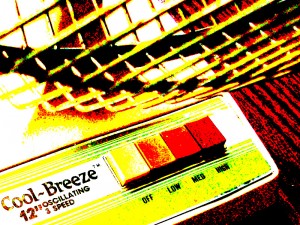
I love this nationwide wailing and gnashing of teeth about the heat.
I grew up in the Deep South, so I earned my hot-weather badge at an early age. Now the rest of the country is in a sweaty panic because it’s hot in June.
In my Mississippi hometown, there was no such thing as a June heat wave. We had one heat wave every year, and it lasted from May to October.
As long as I wasn’t in school, I could have cared less. It never occurred to me and my friends there were places where melting asphalt was a novelty.
Editor’s Note: This post originally appeared November 17, 2010. Me: “So, Martin Luther posted those 95 things that he disagreed with right on the door of the Catholic Church.” My 12 year-old son, R.: “Why didn’t he just post them on his blog?” I never…
Here’s a continuation of my Misprision and Feeling Mystical Series. If you missed part one, read it now! Part Two: The Big Other In the 1980s, with Watchmen and The Dark Knight Returns, comics shifted toward making heroes more “real,” as in more gritty, petty,…
We got up early on the day of the fishing trip. Grandma was making sandwiches for us, and the neon light in the kitchen woke us up. Spam was the order of the day. It was one of Grandpa’s favorites. For him, the only thing…

- One day several years ago, I left a paid parking voucher on the designated area of my dash and grabbed a bite. When I returned, a meter agent was writing me a ticket, nonetheless. When I pointed out the voucher, she said, “I don’t see that!” and continued writing the ticket. As I protested, she said, “You’ll have to take that up with City Hall,” and walked off. I did. The ticket was immediately thrown out.
Editor’s Note: This post first appeared March 16, 2011.

This post may be a little out of character, but there are things here that need to be said. It is regarding one of these projects I work on in my other life as a blunted academic, teaching an endless line of adolescents who think mommy and daddy will foot the bill forever. The rude awakening is coming. No wonder they call it “Commencement.” In any case, about four years ago, I met Dr. Carlos Azcoitia, the principal of a neighborhood school in Chicago. I was impressed by the guy. In 2003, he put his money where his mouth was and resigned from his position as Chicago Public School system’s Deputy Chief of Education to launch a new pre-K through high school program at John Spry Community Links Academy. This was the first time in memory that a member of Chicago’s Board of Education stepped down to take a position as a principal of a small school on Marshall Avenue in the Little Village section of the city.
Editor’s Note: This post first appeared January 17, 2011.
 At the beginning of my teaching career, delighted by class discussion of readings, yet appalled by the quality of my students’ essays and unsure how to explain concepts that I had assumed were intuitive to young writers, I set about grimly, devising a means of teaching them, these embodiments of the “crisis in literacy,” casualties of the Reagan era, MTV addicts, as I often heard them described in faculty meetings, calibration sessions, and the mail room. The most logical method to me was the sentence-level approach. I assumed that a good essay began with sound sentences and a rigid form. I taught accordingly and with the tenacity of a pit bull. My students would take diagnostic tests on grammar at the beginning of the term. They would perform drills and take more tests until they reached a level of proficiency. Classes on writing the essay would begin with instruction on how to write the first sentence of the essay, how to create common ground with a reader, how to state a sound thesis, and later how to create unity, development, and coherence. In fact, I often gave students step-by-step instructions on how to proceed with the whole assignment. Leaving these people to their own devices, I felt, yielded products that I would be incapable of grading. Surprisingly, these methods were successful inasmuch as students learned what I taught–in fact many learned so well that they could master grammar tests and frame their essays just as I had insisted. Still, I was constantly frustrated by their inability to translate the grammar skills they had learned from the handbook into their own writing. They could make 100s on pronoun references tests yet write papers so confounded by “it” and “this” as to easily serve as Rorschach tests. They could define “unity,” “development,” and “coherence,” yet in practice, these terms often seemed synonymous, all meaning “to wear out a superficial idea in written form.” More depressing was the misery that essay-writing obviously caused them. Many otherwise bright and articulate students seemed unable to write anything other than cliches that they mistakenly believed I wanted to hear. Worse, they seemed to be practicing civil disobedience on the issue of global revision. And I had a nagging sense that the proficient writers leaving my classroom were the ones who had arrived that way. The others left stoically, impressively informed about their deficiencies, ready to tell their next instructors in robotic tones: “I don’t know how to develop.”
I used to drive through Vernon, Texas a few times a year. Roy Orbison was born there in 1936. I always thought I’d stop, take a look around, see where he had come from. Orbison was just a tiny bit ahead of my time. I…
Editor’s Note: This post first appeared here December 16, 2010.
cross-posted at RuFreeman.com
A few years ago, when I was working at an elite liberal arts college, I held a freelance job as a writer for the college magazine. Part of my duties included covering speakers who came to campus, one of whom was Cornel West. The piece I wrote, ‘Single Man March,’ was drawn from the six pages of notes that I took, notes that transcribed every word that was being uttered in the room, from the introduction of the speaker to the last response from Mr. West to a question from the audience. I don’t always work that way. I’ve had the kind of education that trained me to pick out the important details from the mass of superfluous fluff that usually punctuates our speech. The things that give me a solid opening for an article or those that highlight a point I wish to make, appear in the auditory version of highlighted text in a book, and I write it down.
Cornel West however is a different cup of tea. His eminence and his intellect combines with his fast paced speech to make it literally impossible to simply wait for “the important pieces.” Every word, every sentence carries something of note, something worth listening to, something worth capturing in an overview. I do not believe in disturbing everybody else at a gathering with the clacking of my keyboard and Cornel West does not allow his speeches to be taped. The task before me then was to simply write down everything. Pen the paper and my ears; these were my tools. In writing about Mr. West, I described him using the words of a faculty member who had called him, with a nod and a smile, during her introduction, “and, yes, the violent and eloquent public intellectual he is.” She seemed, in her remarks, to be carrying over something they had talked about prior to their arrival on stage; at the private dinner, maybe.
Editor’s Note: This post first appeared November 18, 2010.
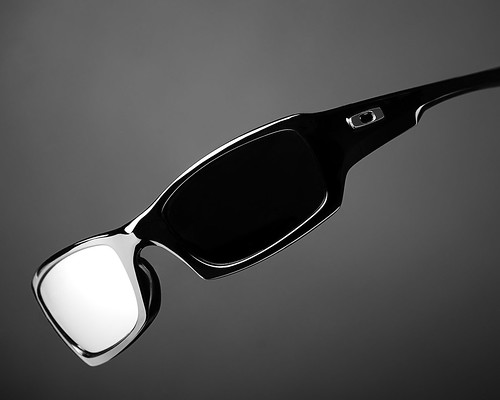
Negative connotations of sunglasses after dark:
1) Person is high
2) Person is blind
3) Person is a liar
4) Person is “trying to be cool.”
Editor’s Note: This post first appeared July 29, 2011.

When Christine Tomaszewski, a photographer I met when we worked at the same tech firm, excused herself from a lunch table of coworkers to climb a wobbly bar stool, lean way over the bar, and shoot a photo of the glasses lining the back wall, I knew we would get along. The pursuit of art and pretty shiny things continues to infuse our conversations and so I was more than pleased when she agreed to an email interview.